
Cost of Living in Colombia vs USA (2026): What I Actually Spend

Is the Cost of Living in Colombia vs USA cheaper?
What is the actual Cost of Living in Colombia vs the United States?
One of the biggest reasons Americans become interested in living or retiring in Colombia is the cost of living.
You’ll see plenty of articles and videos telling you that Colombia is 40%, 50% or even 60% cheaper than the United States.
Those numbers can be useful, but after actually living here, I think there’s a better question:
What kind of life can the same amount of income buy you?
That’s how I look at the difference between Colombia and the United States.
My situation is also a little unusual because I’m not comparing an American apartment with a Colombian apartment.
When I retired in 2018, I was single and primarily responsible for my own expenses. I also made a decision that dramatically reduced my cost of living in the United States:
I lived in my Roadtrek van/RV.
That allowed me to live without paying conventional rent and helped give me the financial freedom to travel.
Today, my life in Colombia looks completely different.
I’m paying rent on a conventional home and supporting a household of four people, including myself, plus a dog.
Yet I’m doing it on essentially the same retirement-income foundation.
That’s what makes my Colombia-versus-USA comparison interesting.
I Was Already Living Cheaply in the United States
I don’t want to create the impression that I moved from an expensive American apartment to Colombia and suddenly discovered inexpensive living.
I had already figured out how to keep my expenses low.
After retiring, my Roadtrek was both my home and a major part of my transportation. I wasn’t paying $2,000 or $3,000 every month for an apartment in Southern California.
That was intentional.
I still had expenses. An RV isn’t free simply because you own it. There was fuel, insurance, registration, maintenance and repairs. At times there were storage expenses as well.
But I had eliminated what would normally have been my largest monthly bill: rent or a mortgage.
For a while I also owned another vehicle. Eventually I sold it because I simply wasn’t using it enough to justify the expense.
That lifestyle helped make my travel possible.
I wasn’t maintaining an expensive American home while traveling around Latin America. I had deliberately structured my life so that a large portion of my retirement income wasn’t disappearing into housing every month.
Colombia Changed What My Money Could Support
This is where the comparison becomes more interesting.
My American budget was basically supporting one person living a deliberately unconventional lifestyle.
My Colombian budget is supporting something very different:
A home. A family. Four people. And a dog.
That means rent, electricity, water, gas, internet, phones, groceries, restaurants, transportation and all the miscellaneous expenses that come with running a household.
So my standard of living in Colombia shouldn’t really be compared with the unusually inexpensive lifestyle I created for myself in the United States.
The better comparison is:
What would it cost me to maintain my present standard of living in the United States?
That’s where the difference becomes much larger.
If I returned to the United States and rented the kind of home I would actually want to live in—particularly in Southern California—a large portion of my monthly income could disappear into housing before I bought the first bag of groceries.
Then I’d still need utilities, food, transportation, insurance and everything else.
In Colombia, that same general income is doing considerably more work.
My Actual Housing Cost in Colombia
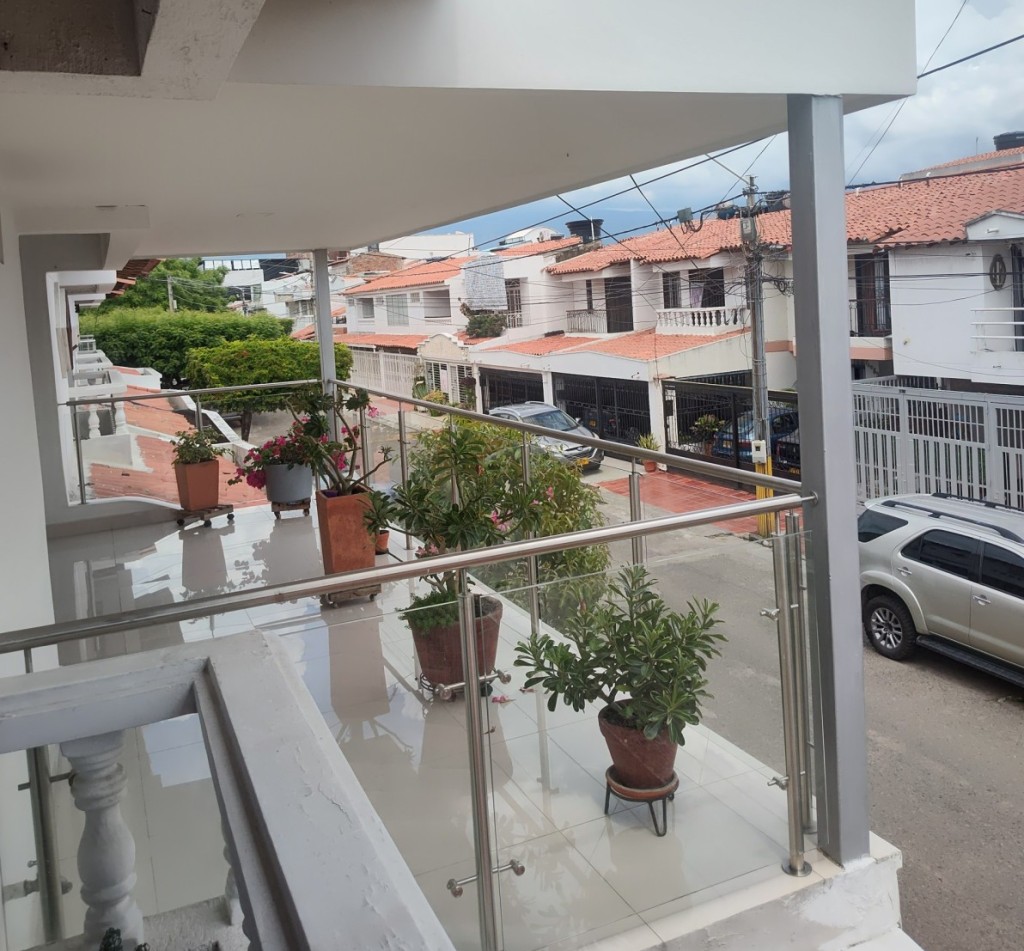
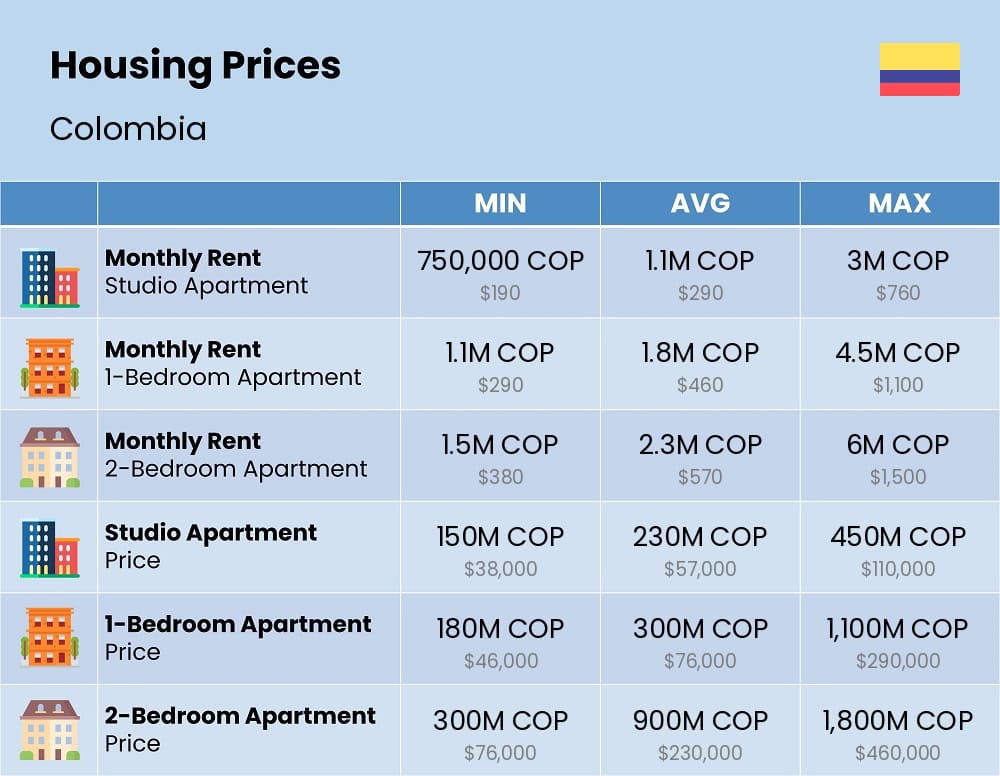
I currently pay approximately COP 1.9 million per month in rent.
The exact dollar equivalent changes constantly because of the exchange rate, which I’ll get to later.
But even when the peso is relatively strong against the dollar, my Colombian housing cost is substantially below what I’d expect to pay for comparable conventional housing in the parts of the United States where I would actually choose to live.
And that’s an important qualification.
People sometimes ask, “How much does it cost to live in Colombia?”
My response is:
Where in Colombia?
That’s like asking how much it costs to live in the United States.
San Diego isn’t rural Arkansas.
And Cúcuta isn’t Medellín, Bogotá or Cartagena.
Housing costs vary enormously depending on the city, neighborhood, size of the property, amenities and whether you’re shopping in an area heavily marketed toward foreigners.
What My Household Bills Actually Look Like
Here are approximate figures from my own household:
| Expense | Approximate Monthly Cost |
|---|---|
| Rent | COP 1.9 million |
| Electricity | COP 800,000 |
| Water | COP 300,000 |
| Internet + phone | COP 500,000 |
| Gas | COP 250,000 |
| Neighborhood security/vigilante | COP 100,000 |
Those are household expenses, not expenses for one retired American living alone.
That’s important when comparing my numbers with somebody else’s “$1,500-a-month Colombia budget.”
Could I personally live in Colombia for much less?
Absolutely.
But that’s not the life I’m currently living.
Utilities Can Surprise You
Not everything in Colombia is ridiculously cheap.
Electricity is a good example.
We live in a hot part of the country, and electricity can be a significant expense. Someone living in a cooler Colombian city might spend substantially less.
Colombia also uses an estrato system that can affect utility pricing.
So when somebody tells you their electric bill is $30, that doesn’t necessarily mean yours will be.
Climate, household size, location, appliances and lifestyle all matter.
This is one of the recurring themes you’ll find throughout this article:
There is no single “Colombia cost of living.”
Food for One Person and Food for Four Are Two Different Budgets
Food is another category where my current expenses need context.
When I was budgeting primarily for myself, feeding one person was obviously different.
Today I’m part of a four-person household.
Our food budget has generally been somewhere around $800 to $1,000 per month, depending on the month and how much we eat out.
Could one person live on substantially less?
Of course.
A single retiree who shops locally, cooks at home and eats Colombian food could have a dramatically smaller food budget than ours.
That’s why I don’t want someone looking at my numbers and thinking it costs $1,000 a month to feed yourself in Colombia.
It doesn’t.
I’m showing what my household actually spends, not constructing the cheapest theoretical Colombia budget.
Eating Out Is Still Affordable—If You Know Where to Eat
One of the things I continue to enjoy about Colombia is the ability to eat out without automatically turning it into a major financial event.
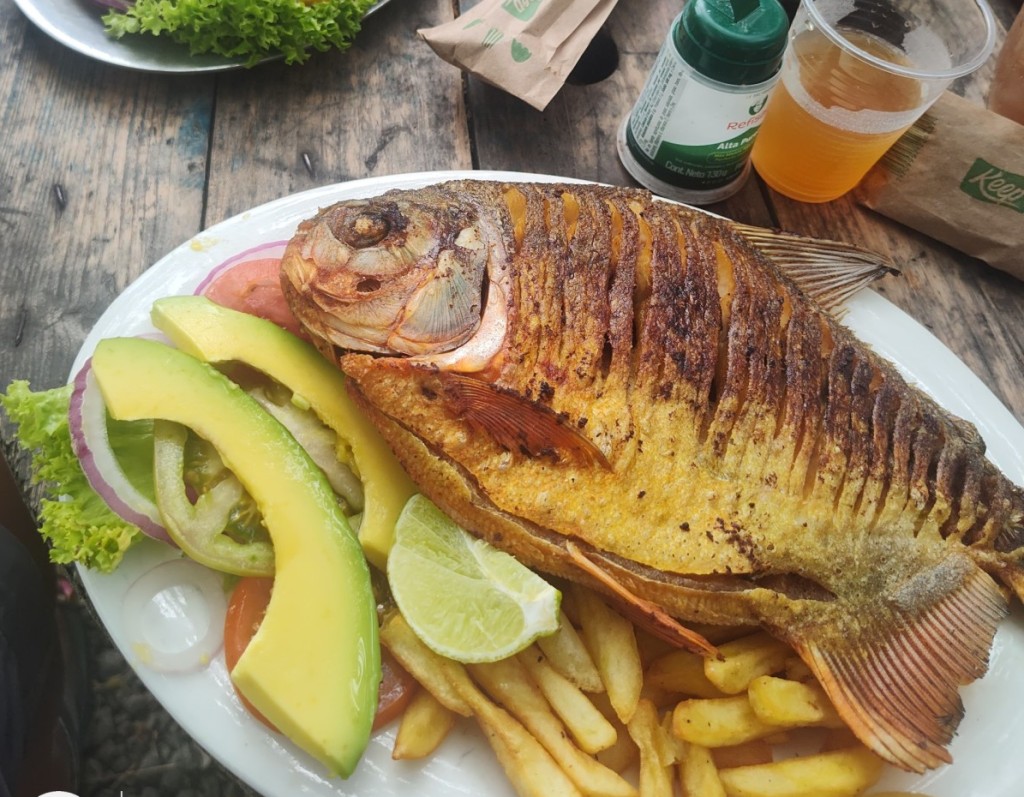
We can still find local lunches for around $5 per person.
For a family, that makes a difference.
But I’ve also noticed that restaurants don’t feel quite as inexpensive in U.S.-dollar terms as they did before.
Part of that is inflation.
Part of it is where we choose to eat.
And a major part of it is something every American living on dollar income in Colombia needs to understand:
the exchange rate.
The $22 Steak That Got My Attention
Recently I ate at Londeros, a well-known restaurant in a mall.
I had baby beef steak, fries, salad and a drink.
My meal worked out to approximately $22.
That’s not expensive compared with a similar restaurant meal in many parts of the United States.
But it caught my attention because, not that long ago, the same kind of Colombian restaurant experience felt closer to about $15 in dollar terms.
That doesn’t necessarily mean the restaurant increased its prices by 45%.
Something else happened.
The value of the dollar changed.
The Exchange Rate Can Change Your Cost of Living Without You Changing Anything
This is one of the most important things I’ve learned about budgeting in Colombia.
If your income comes from the United States—Social Security, retirement income, VA benefits, investments or anything else denominated in dollars—you don’t really have just one cost of living.
You have a peso cost of living and a dollar cost of living.
Suppose something costs COP 2 million.
At COP 4,000 to $1, that’s:
$500
At COP 3,200 to $1, the exact same COP 2 million expense becomes:
$625
Nothing changed in Colombia.
The landlord didn’t raise the rent.
The restaurant didn’t increase the bill.
You didn’t change your lifestyle.
But it now costs you $125 more because you’re converting dollars into pesos.
That’s a 25% increase in your dollar cost without a single peso of inflation.
This is why I’ve become increasingly cautious when I see somebody say:
“You can retire in Colombia for $2,000 a month.”
Maybe you can.
I’ve written about that myself.
But the question should be:
At what exchange rate?
Don’t Build a Retirement That Only Works With a Strong Dollar
This is one of the biggest lessons I would give anyone considering retiring in Colombia.
Don’t calculate your budget using only today’s favorable exchange rate.
Run it several ways.
What happens if the dollar buys 4,200 pesos?
Great.
What happens at 3,800?
Probably still fine.
But what happens at 3,500? Or 3,200?
If your entire retirement plan starts falling apart because the dollar loses strength, your budget was probably too tight to begin with.
I would rather have margin.
The exchange rate will move in both directions. I’ve experienced the benefits when the dollar was strong, and I’ve experienced the other side when it wasn’t.
Colombia Has Its Own Inflation Too
Of course, currency isn’t the entire explanation.
Colombian prices themselves change.
Groceries go up.
Restaurant prices go up.
Rent can increase.
Utilities change.
Services get more expensive.
That’s normal.
So an American living here can occasionally get hit from both directions: Colombian prices increase while the dollar simultaneously buys fewer pesos.
That’s when Colombia can suddenly feel considerably more expensive even though it’s still inexpensive compared with many parts of the United States.
Transportation Is Another Complicated Comparison for Me
Transportation is another category where my personal situation doesn’t fit neatly into the usual cost-of-living chart.
For years in the United States, my Roadtrek was both a vehicle and my home.
I also had another vehicle for a period of time, but eventually I sold it because I wasn’t using it enough.
So I wasn’t maintaining the typical American arrangement of:
house or apartment + primary car + all the expenses associated with both.
That matters.
If I returned to a conventional lifestyle in the United States, transportation could once again become a significant monthly expense.
In Colombia, depending on where you live, you can use taxis, ride-hailing services, buses and other forms of transportation without necessarily owning a vehicle.
I’ve spent enough years around cars and transportation in the United States to appreciate how much vehicle ownership really costs once you include insurance, registration, fuel, maintenance, repairs and depreciation.
Sometimes the cheapest car is the one you don’t need to own.
Healthcare and Dental Care Can Be Dramatically Different
Healthcare is another area where the Colombia-USA comparison becomes interesting.
I’ve received healthcare in both countries, and Colombia has given me some experiences that would be difficult to duplicate at the same cash price in the United States.
One simple example is dental care.
I paid around $330 for a root canal and crown in Colombia.
That doesn’t mean every Colombian dentist is inexpensive or that every medical procedure costs a fraction of its American equivalent.
And cost alone isn’t how I choose healthcare.
But for routine care and certain procedures, the difference can be substantial.
For retirees, healthcare deserves to be considered separately from groceries and rent because it can become an increasingly important part of the budget as we get older.
What About Travel?
This is another place where the lifestyle comparison matters to me.
Travel has been a priority since I retired.
Living in the van helped make that possible in the United States because I wasn’t sending a huge rent payment to a landlord while I was somewhere else.
Colombia gives me a different version of that financial flexibility.
I’m now maintaining an actual home and household, but I’m still able to travel.
I’ve traveled extensively around Colombia and elsewhere in Latin America and the Caribbean while maintaining my life here.
That matters to me.
A cost-of-living comparison shouldn’t just tell me whether I can survive.
I want to know whether I can afford to live.
Those aren’t the same thing.