
Colombia Visa Deadline October 31, 2026: What Permanent Residents Need to Know
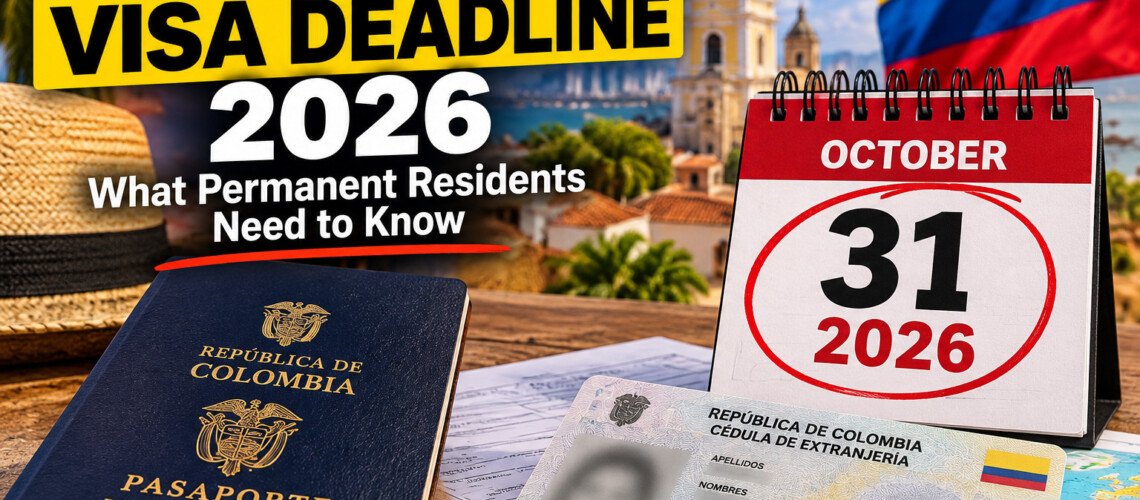
Colombia Visa Deadline 2026
If you’ve been living in Colombia for several years under a permanent resident visa, there’s an important immigration deadline approaching.
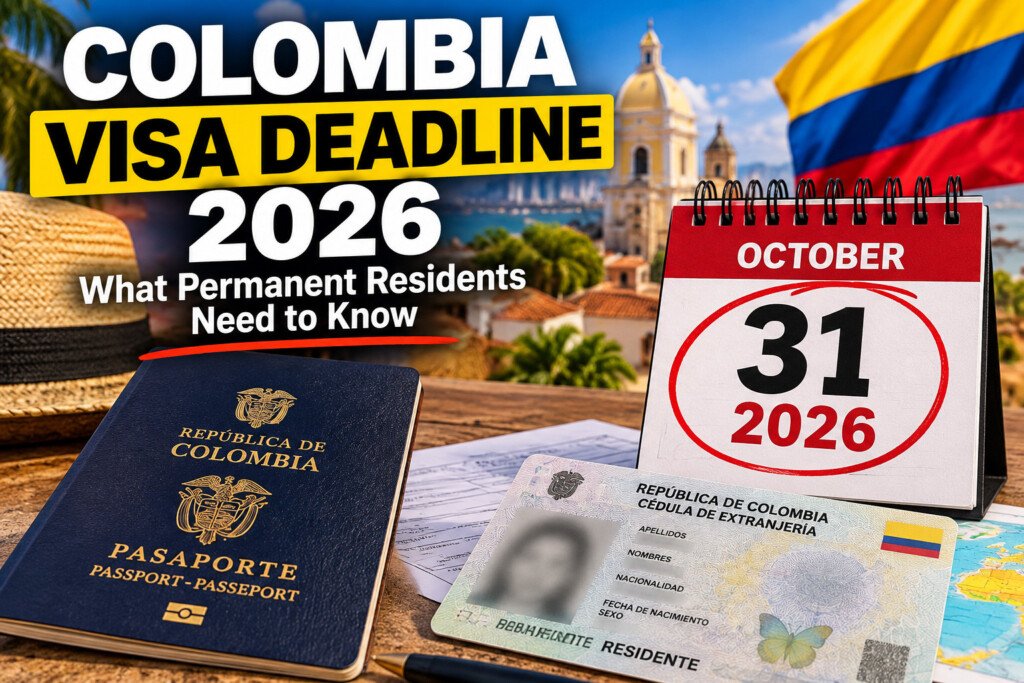
Colombia’s Ministry of Foreign Affairs has reminded certain foreign residents that they must complete a visa transfer before October 31, 2026.
This isn’t a new visa requirement for everyone moving to Colombia. It specifically affects certain permanent residents whose visas were issued under previous immigration regulations.
For Americans and other foreigners who have established their lives in Colombia, understanding whether this deadline applies to them could prevent unnecessary immigration complications.
Here’s what you need to know.
What Is the Colombia Visa Deadline 2026?
The Colombia visa deadline 2026 comes from changes to the country’s immigration regulations, particularly Resolution 5477 of 2022 and Resolution 9316 of 2024.
Under these rules, certain holders of older permanent resident visas must complete a procedure known as traspaso de visa, or visa transfer.
The original regulations established a transition period for permanent residents whose visas were issued under previous immigration rules.
Resolution 9316 of 2024 extended that transition period to October 31, 2026.
On September 15, 2026, Colombia’s Ministry of Foreign Affairs issued another public reminder confirming the deadline.
The government specifically encouraged affected residents to complete the procedure before the deadline rather than waiting until the final days. Cancillería
Who Must Complete the Visa Transfer?
This is the most important distinction.
Not every foreign resident in Colombia needs to transfer a visa by October 31.
According to the Ministry of Foreign Affairs, the requirement applies to certain holders of permanent resident (R) visas issued under earlier immigration regulations.
The September announcement identifies three circumstances involving older permanent resident visa labels:
- The visa label has already expired.
- The visa label is approaching expiration.
- The visa was originally issued with indefinite validity.
Foreigners who recently obtained permanent residency generally aren’t covered by this particular transitional deadline unless another visa-transfer requirement applies to their situation.
For example, someone who received a permanent resident visa under an earlier immigration system may need to update that visa even if they’ve lived legally in Colombia for many years.
Someone holding a recently issued migrant visa, however, shouldn’t automatically assume this deadline applies to them.
The type of visa, when it was issued, and its current status are what matter.
Does This Apply to Colombia’s Marriage and Retirement Visas?
Many Americans establish residency in Colombia through marriage, retirement income, or other qualifying circumstances.
These immigration pathways can involve different visa categories.
Colombia generally distinguishes between:
Visitor (V) visas: Intended for specific temporary activities and permitted stays.
Migrant (M) visas: Used for qualifying circumstances such as certain family relationships, employment, and pension-based residency.
Permanent Resident (R) visas: Intended for foreigners who qualify for permanent residence under Colombian immigration law.
The October 31 transitional deadline specifically concerns certain older permanent resident visas.
Someone holding a valid M visa through marriage or retirement is not automatically subject to this particular deadline.
However, migrant visa holders must still comply with their own visa expiration dates, renewal requirements, and applicable immigration conditions.
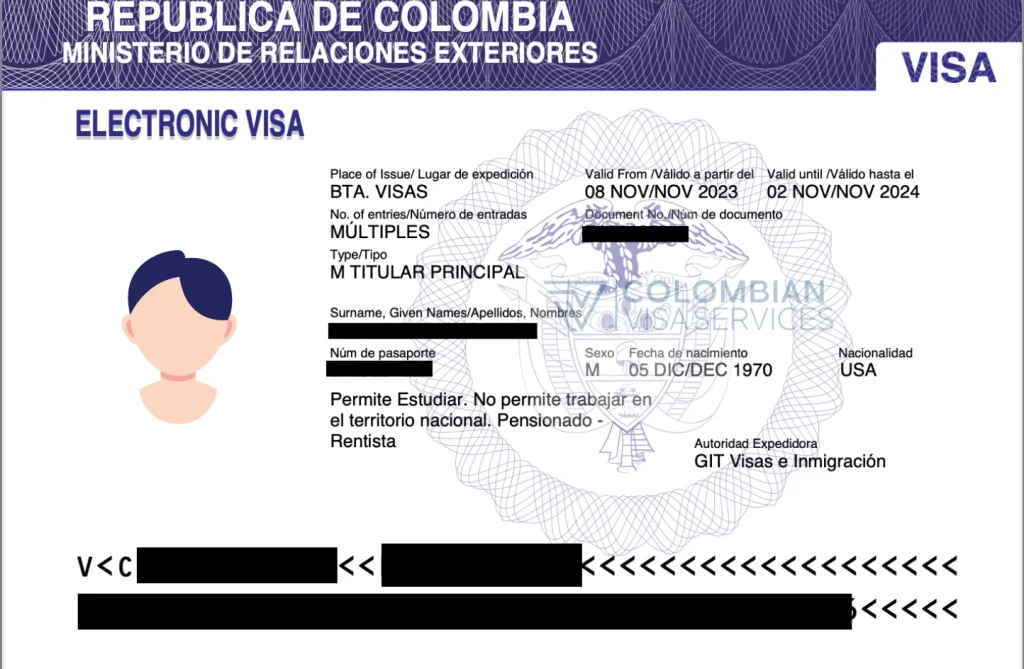
If you’re unsure which visa you hold, check the visa document rather than relying solely on your Colombian identification card.
What Is a Visa Transfer in Colombia?
A visa transfer, known in Spanish as traspaso de visa, is a procedure through which Colombia’s immigration authorities consider reissuing an existing visa.
It isn’t necessarily the same as applying for permanent residency for the first time.
For qualifying permanent residents, the procedure allows the government to update the visa documentation under the applicable immigration regulations.
Colombia’s current rules also generally require permanent resident visa holders to complete a visa transfer every five years.
That periodic requirement is separate from the October 31, 2026 transitional deadline affecting certain older visas.
The distinction matters because someone may need to transfer a visa even though their underlying permanent resident status was originally granted many years ago. Cancillería
Why Does the Colombian Cédula de Extranjería Matter?
Foreign residents in Colombia are familiar with the cédula de extranjería, the identification document issued by Migración Colombia.
It’s used for everyday activities such as banking, identification, and administrative procedures.
For permanent residents covered by the transitional rules, completing the required visa transfer is important because the updated visa documentation is necessary for the subsequent issuance of the corresponding cédula de extranjería.
This means the issue isn’t simply whether someone possesses an old visa document.
It’s also about maintaining updated immigration documentation that can be used for identification and administrative purposes in Colombia.
The Ministry of Foreign Affairs has specifically emphasized the connection between visa transfers and the issuance of the cédula de extranjería. Cancillería
How to Complete a Colombia Permanent Resident Visa Transfer
The Colombian government says the visa transfer process is completed online through its official immigration platform.
You do not need to hire an intermediary simply to submit the application.
Step 1: Check Your Current Visa
Start by reviewing your visa document.
Identify the visa category, issuance date, expiration information, and whether it was issued under previous immigration regulations.
If you hold an older permanent resident visa with indefinite validity, pay particular attention to the October 31 deadline.
Step 2: Review the Official Requirements
The Ministry of Foreign Affairs maintains instructions for the visa transfer procedure.
The standard requirements include documentation such as:
- A copy of the visa being transferred.
- A copy of the cédula de extranjería, when applicable.
- A certificate of migratory movements issued by Migración Colombia.
- A letter explaining the reason for the visa transfer.
- Other supporting documents required for the applicant’s circumstances.
Certain documentation requirements differ for permanent resident visa holders, so applicants should follow the current official instructions rather than assuming every item applies equally.
Applicants whose resident visa documentation has already expired may face additional requirements, including a salvoconducto in applicable circumstances.
Official instructions: Colombia Visa Transfer Requirements — Cancillería
Step 3: Submit the Application Online
Colombia’s Ministry of Foreign Affairs provides an official online visa application platform.
Applicants can begin the process through the government’s visa system.
Official application portal:
Colombia Online Visa Application System
Follow the instructions for the appropriate visa transfer procedure.
Step 4: Pay the Applicable Fees
Applicants should review the current government fee schedule and available payment methods during the application process.
The Ministry notes that visa study fees are generally nonrefundable.
Because fees and payment procedures can change, use the amounts displayed through the official government application system rather than relying on older online guides.
Step 5: Follow Up on the Application
After submitting the application, monitor the email address provided to the Ministry of Foreign Affairs.
If additional documentation is requested, respond according to the instructions and deadlines provided.
Once the visa transfer is approved and issued, follow the applicable Migración Colombia procedures for updating your cédula de extranjería.
What Happens If You Miss the October 31 Deadline?
The government has clearly established October 31, 2026 as the deadline for the affected group of permanent residents.
However, it’s important not to confuse missing a visa-transfer deadline with automatically losing permanent resident status.
The official announcements reviewed for this article do not establish that every affected resident will automatically lose permanent residency on November 1.
What they do establish is that the transfer is mandatory for the specified group and necessary for updating the relevant visa documentation.
Anyone who believes they may miss the deadline should contact the Ministry of Foreign Affairs directly to determine the appropriate procedure for their circumstances.
Waiting until the deadline has passed could create unnecessary complications, particularly if additional documents or immigration authorization are required.
Why Americans Retiring in Colombia Should Pay Attention
Colombia has become an attractive retirement destination for Americans seeking a different lifestyle, lower living expenses, and access to private healthcare.
But immigration requirements are an important part of making that lifestyle sustainable.
It’s easy to focus on the financial side of retirement abroad: monthly income, rent, exchange rates, healthcare expenses, and travel.
Residency documentation deserves just as much attention.
Someone who has lived in Colombia for ten or fifteen years might reasonably assume that an old permanent resident visa doesn’t require further attention.
Under the current rules, that assumption could be incorrect.
Even permanent residents need to remain aware of changes affecting their immigration documentation.
My Experience With Colombia’s Visa Process
Living in Colombia has given me a greater appreciation for the administrative details involved in establishing residency in another country.
My own immigration experience has involved obtaining a Colombian migrant visa through marriage and applying for the corresponding cédula de extranjería.
That process taught me the importance of keeping documents organized, understanding which government agency handles each procedure, and paying attention to expiration dates.
But my situation is different from that of someone holding an older permanent resident visa.
The October 31 deadline isn’t a requirement that automatically applies to my current migrant visa.
That’s why I think it’s important to explain exactly who is affected rather than suggesting that every American living in Colombia needs to rush into another immigration application.
Whether you’re moving to Colombia for the first time or have lived here for decades, understanding your specific visa category is essential.
Where to Find Official Colombia Immigration Information
For immigration questions, I recommend starting with Colombia’s official government sources.
The Ministry of Foreign Affairs, commonly called the Cancillería, handles visa applications and visa transfers.
Migración Colombia handles immigration control and procedures involving the cédula de extranjería.
For this particular deadline, the most useful resources are:
1. Official September 2026 announcement
Cancillería — Permanent Resident Visa Deadline Announcement
2. Official visa transfer instructions
Cancillería — Traspaso de Visa
3. Resolution 9316 of 2024
Colombia’s Official Immigration Regulation
These sources provide the government’s own explanation of the deadline and applicable procedures.
Final Thoughts: Don’t Ignore the Colombia Visa Deadline 2026
The Colombia visa deadline 2026 is an important reminder that immigration regulations can change even for people who have already established permanent residency.
For certain holders of older permanent resident visas, October 31, 2026 is the deadline to complete the required visa transfer.
For everyone else, the lesson is broader.
Know which visa you hold, understand its conditions, and keep track of the dates and documentation requirements that apply to your situation.
Colombia can offer an excellent lifestyle for Americans considering retirement or relocation, but making that lifestyle work over the long term means staying informed about the rules that allow you to remain here legally.
A little attention to your immigration paperwork today can prevent much bigger complications tomorrow.