
Colombian Food: What Americans Should Expect When Eating in Colombia
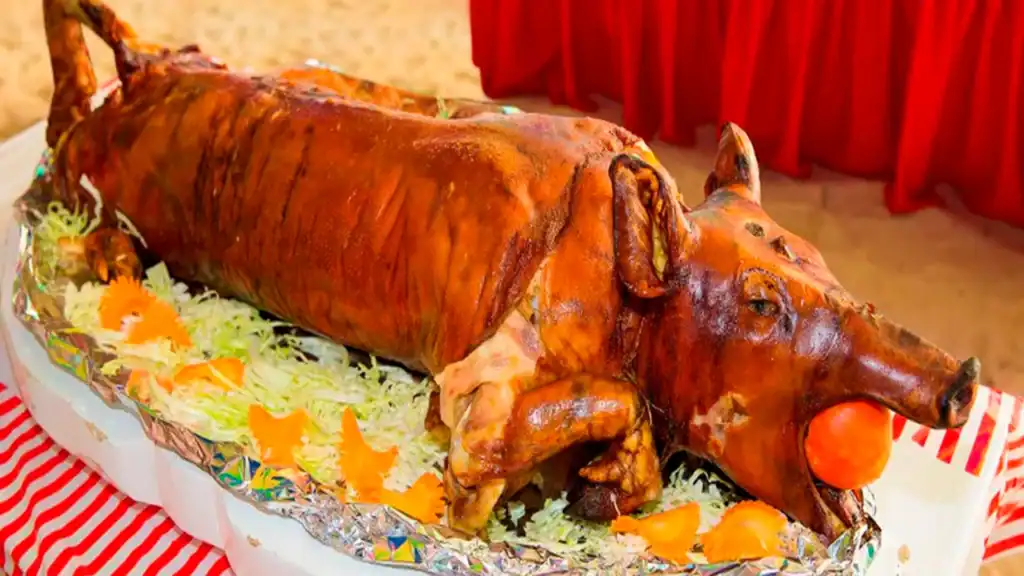 Lechona
Colombian Food:
One of the things travel has taught me is that saying you like “Latin food” doesn’t really tell you very much.
I grew up in Los Angeles and Southern California, where Mexican food and Mexican-American culture were part of everyday life. For a long time, that was my main reference point for food from Latin America.
Then I started traveling.
Costa Rica was one of the first places that showed me how different the food could be. Mexico itself taught me that what I knew from California wasn’t necessarily identical to what I would find traveling through Mexico.
Ecuador added another experience.
And then I came to Colombia.
After traveling around the country and eventually living here, I’ve learned that Colombian food has its own identity—and even saying “Colombian food” doesn’t tell the entire story.
What people eat can change considerably depending on where in Colombia you happen to be.
Colombian Food Is Not Mexican Food
This sounds obvious now.
But I think plenty of Americans arrive in Latin America with Mexican food as their main point of reference.
Tacos, burritos, enchiladas, salsa, tortillas and heavily seasoned dishes are what many Americans associate with food south of the United States.
Then you sit down at a restaurant in Colombia and realize you’re somewhere completely different.
Colombian cooking generally isn’t built around the same flavors or ingredients Americans associate with Mexican food.
You’ll find rice, beans, potatoes, yuca, corn, plantains, avocado, soups, meats and plenty of arepas.
Some dishes are simple.
Some are enormous.
And depending on where you travel, the same basic ingredients can be prepared very differently.
It took some adjustment for me.
But that’s part of traveling.
I didn’t come to Colombia to recreate Southern California.
Arepas Are Everywhere — But They Aren’t All the Same
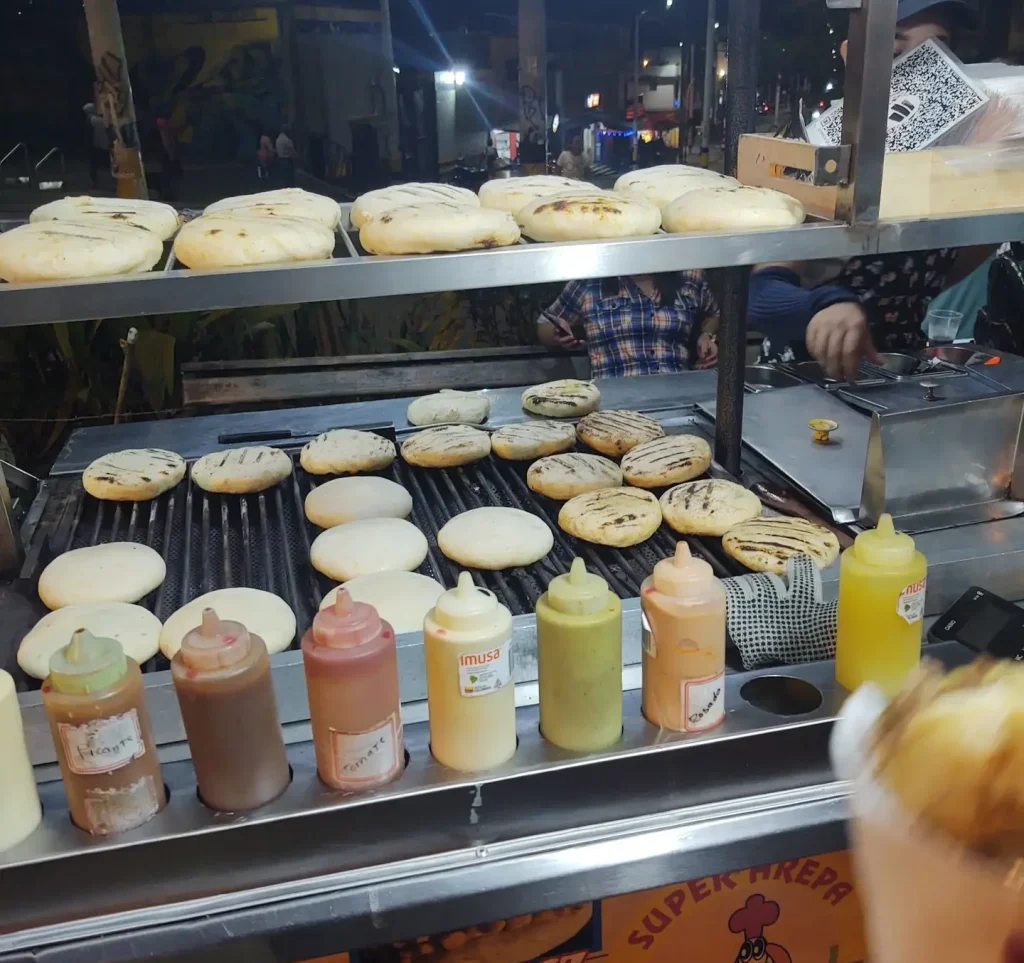
It’s difficult to talk about Colombian food without talking about the arepa.
At its simplest, an arepa is made from cornmeal dough and cooked into a round cake. But that description doesn’t begin to explain how many versions you’ll encounter.
Some are thin and relatively plain.
Others contain cheese.
Some are grilled.
Others are fried.
And different regions have their own styles.
The basic arepa can also function more like bread alongside a meal rather than being the entire meal itself.
That was another adjustment for me.
Growing up around Mexican food, tortillas were familiar. In Colombia, the arepa occupies some of that everyday space, but it’s very much its own thing.
And once you’ve spent enough time here, seeing an arepa next to breakfast or another meal starts to feel completely normal.

Plantains Took Some Getting Used To
I had already encountered plantains during my travels in Costa Rica, so they weren’t completely new to me when I arrived in Colombia.
But Colombians certainly find plenty of ways to use them.
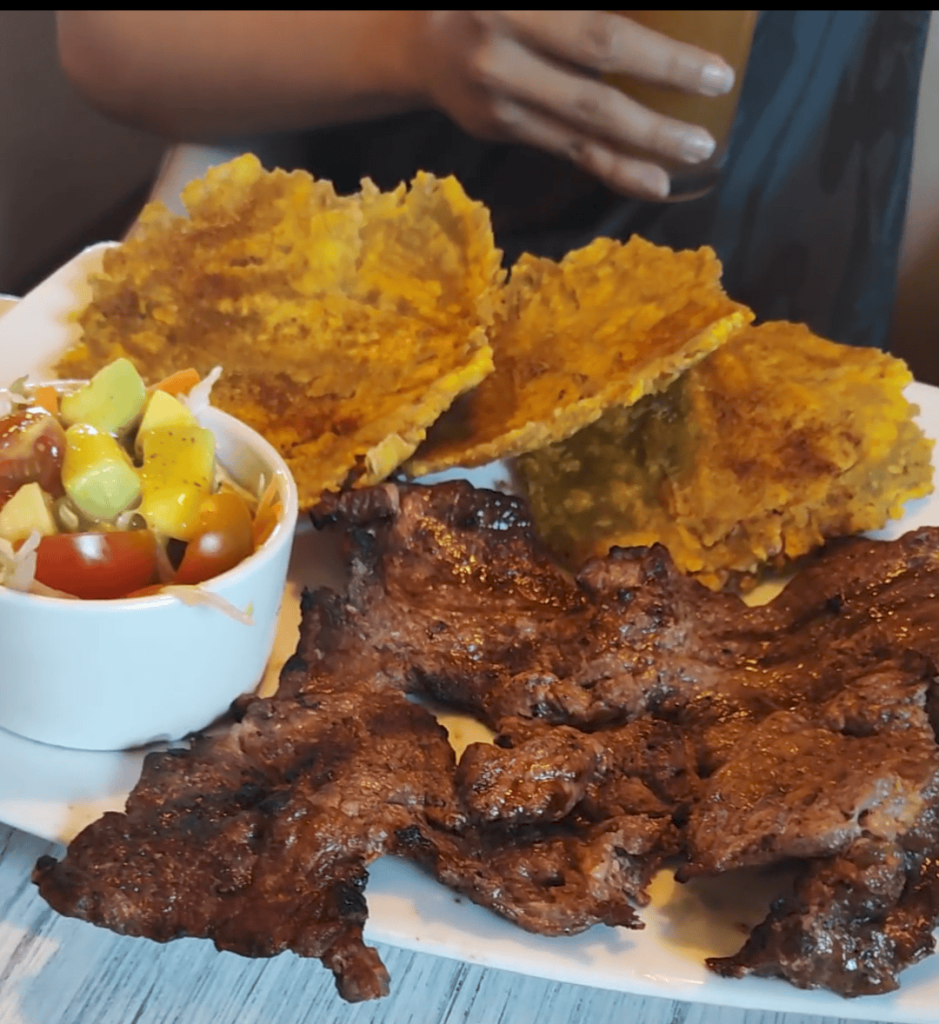
You’ll see sweet ripe plantains, fried green plantains, patacones and plantains served alongside all kinds of meals.
I don’t need plantains with everything.
But I’ve learned to enjoy them on occasion.
That’s been part of my experience with Colombian food in general. I don’t have to fall in love with every traditional dish to appreciate it.
Travel is partly about being willing to try what’s in front of you.

Chicharrón Is Another Colombian Favorite I’ve Learned to Enjoy
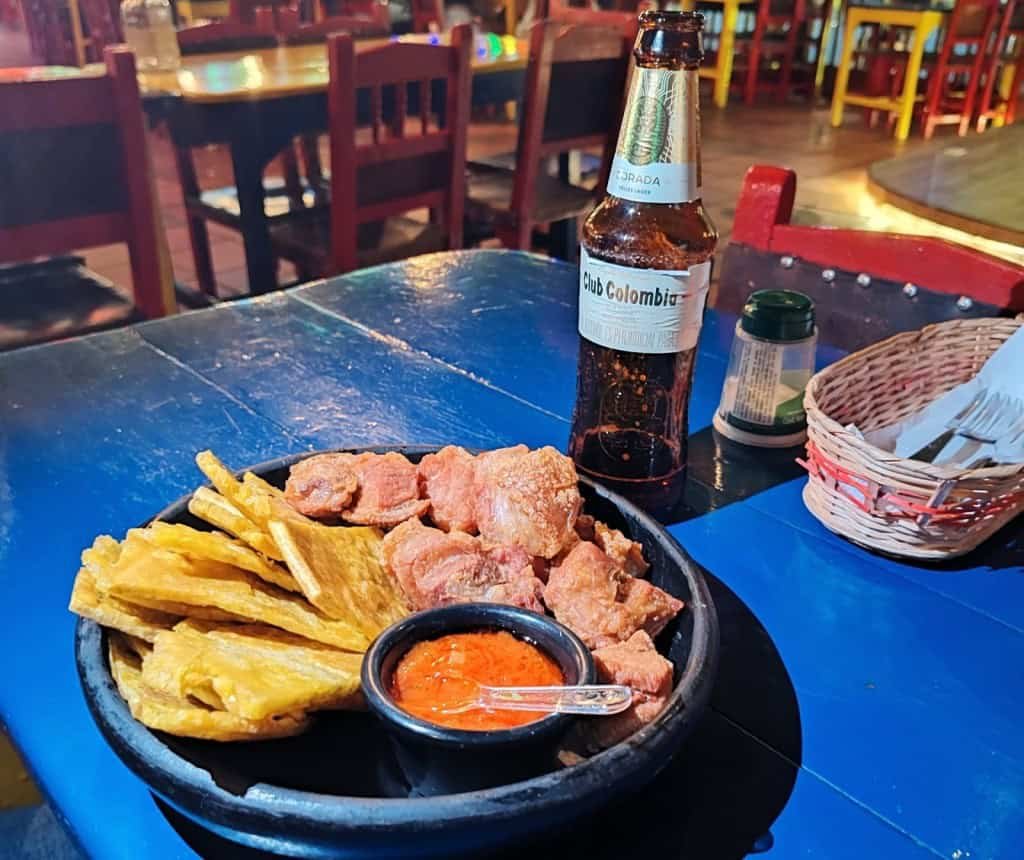
Chicharrón is another food you’ll encounter frequently, particularly in Antioquia and dishes associated with Paisa culture.
It’s essentially pork belly or pork with the skin cooked until the outside becomes crisp.
When it’s prepared well, I enjoy it.
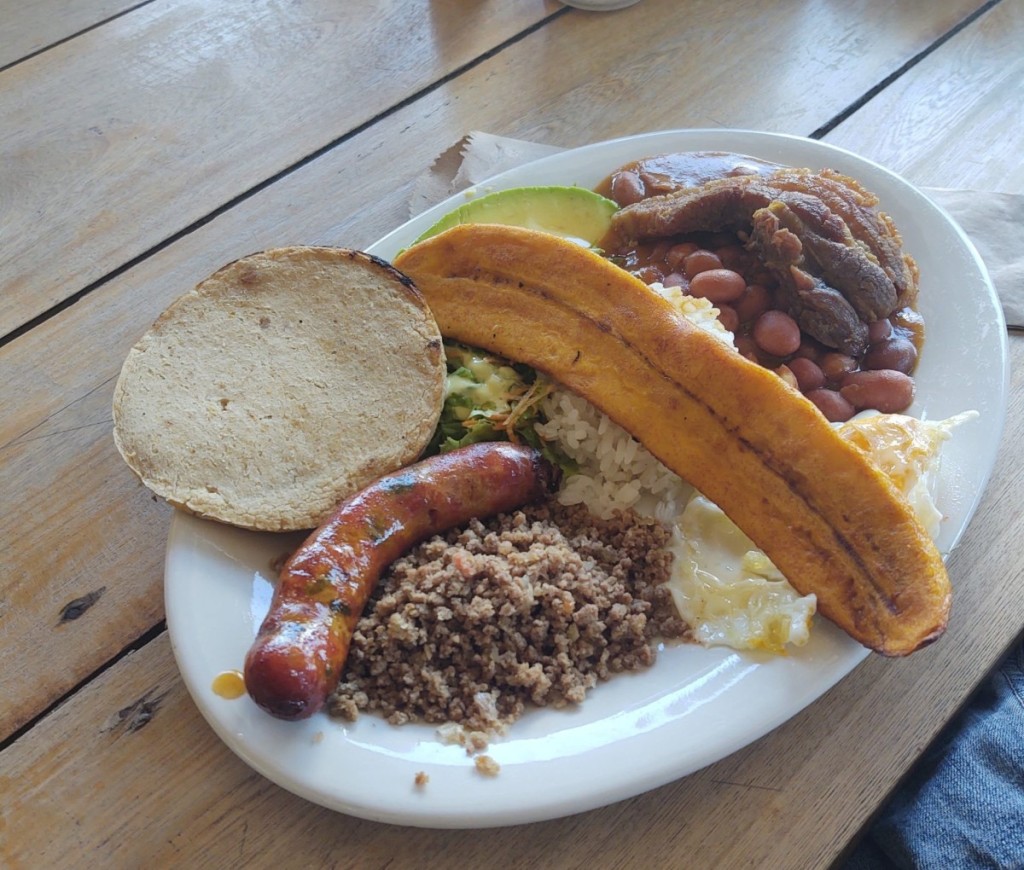
And if you order one of Colombia’s most famous dishes, bandeja paisa, there’s a good chance chicharrón is going to be part of the experience.
Bandeja Paisa Is Almost an Event
If someone asks about famous Colombian food, bandeja paisa will probably appear near the top of the list.
This dish is associated particularly with Antioquia and the Paisa region.
A traditional version can include beans, rice, ground beef, chicharrón, fried egg, plantain, avocado and an arepa.
That’s a lot of food.
The first thing Americans should understand about bandeja paisa is that it isn’t exactly a light lunch.
Depending on the restaurant, the plate can be enormous.
But it’s worth trying, particularly if you’re visiting Medellín or Antioquia.
It’s one of those meals that tells you something about the region as much as it feeds you.
Ajiaco Gives Bogotá Its Own Identity
Travel to Bogotá and you’ll encounter another famous Colombian dish: ajiaco.
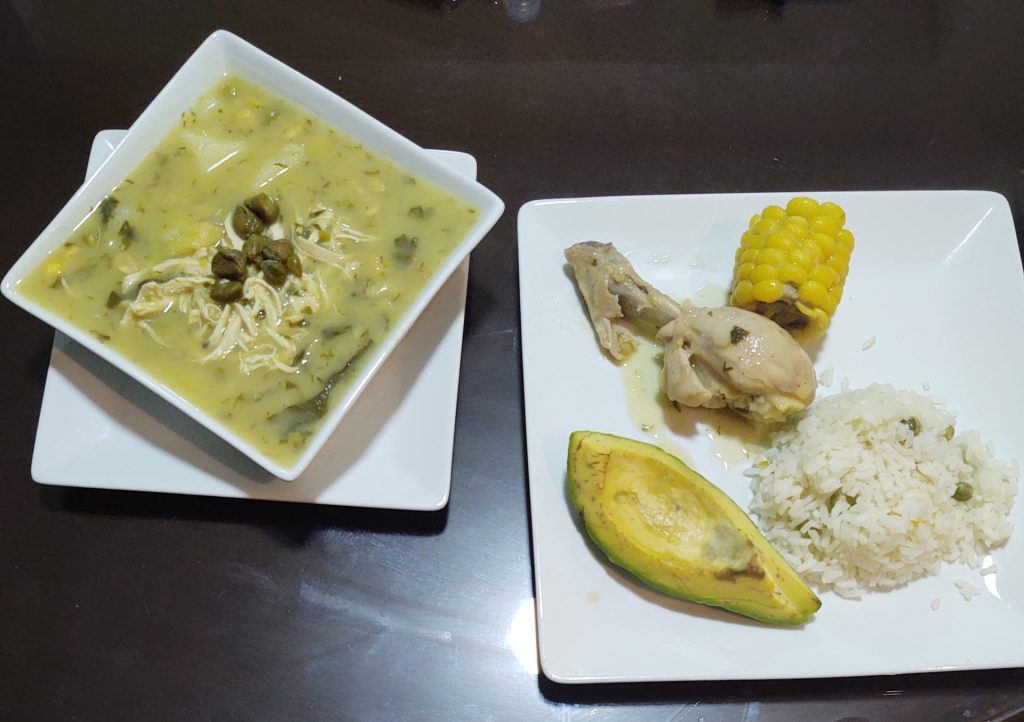
Ajiaco is a hearty chicken and potato soup traditionally associated with Bogotá and the surrounding Andean region.
It typically contains several types of potatoes, corn and guascas, an herb that gives the soup its characteristic flavor.
Capers, cream, avocado and rice may accompany it.
And in Bogotá’s cooler climate, the dish makes sense.
That’s something I find interesting about Colombian cuisine.
The geography often explains the food.
What feels appropriate in cool, high-altitude Bogotá isn’t necessarily what you’re looking for on a hot afternoon along the Caribbean coast.
Cartagena Has a Completely Different Food Experience
Cartagena is another good example of why I don’t like treating Colombia as one uniform culture.
The Caribbean influence changes things.
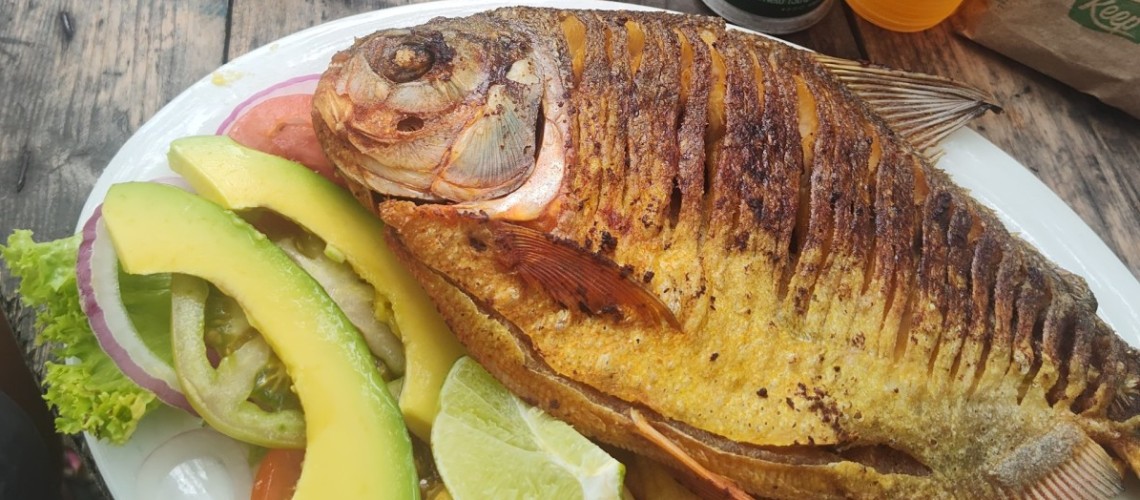
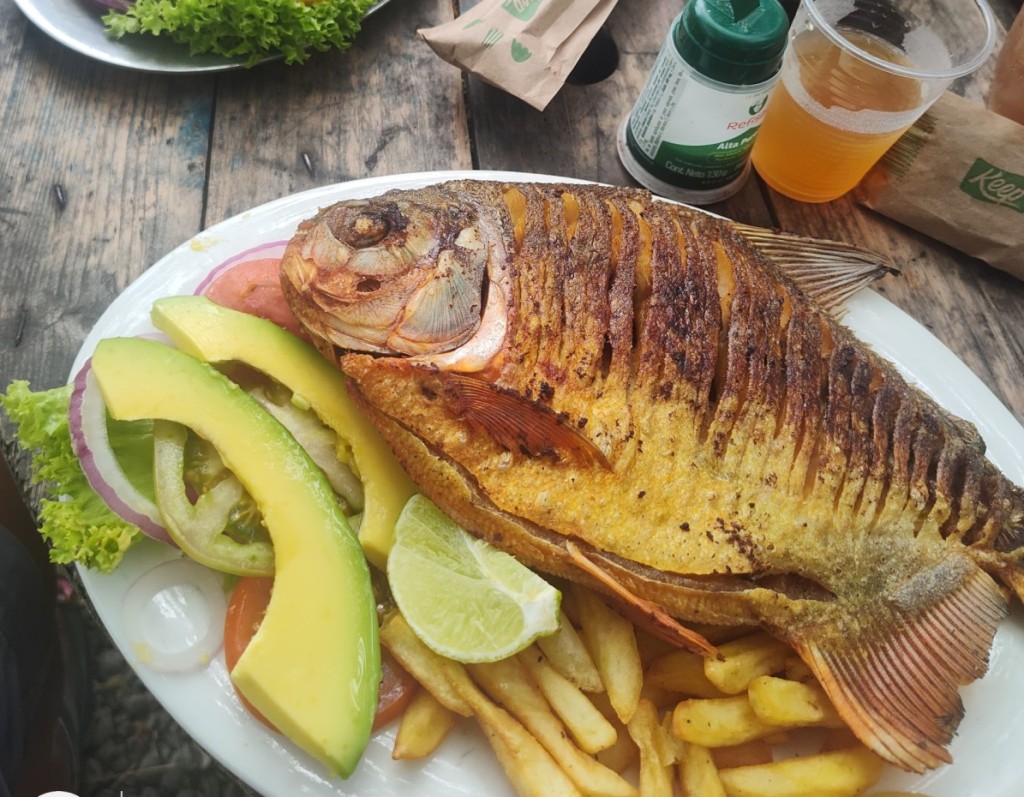
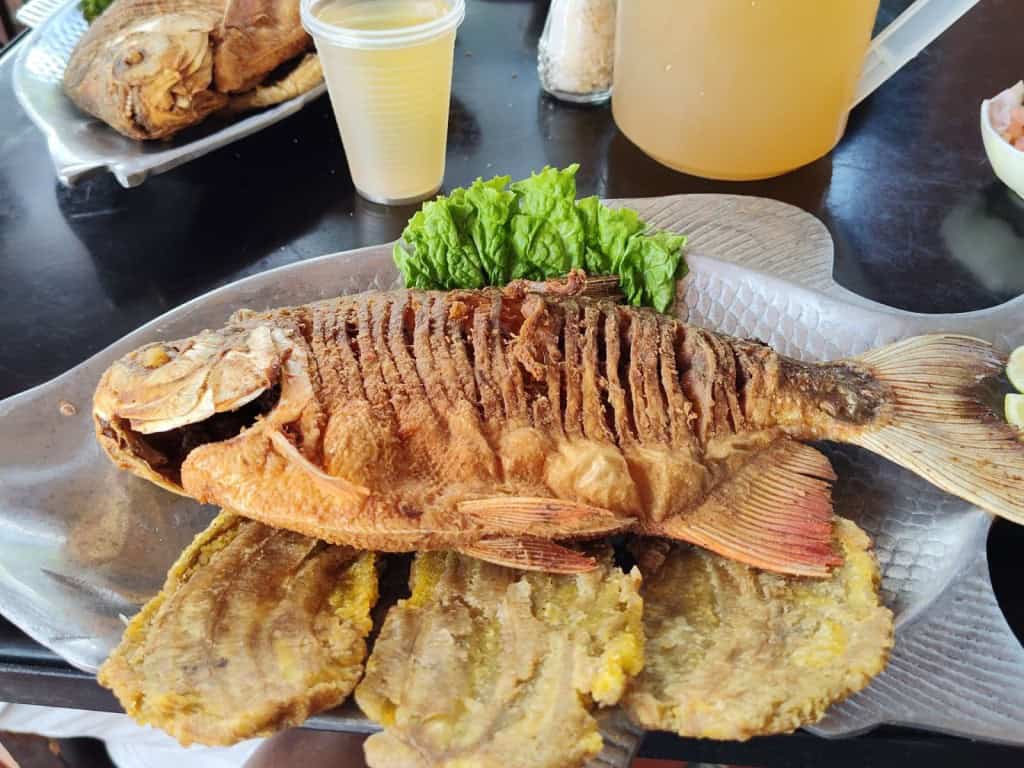
You’ll find more seafood, coconut rice, fried fish and coastal flavors.
A typical plate might include an entire fried fish accompanied by coconut rice, salad and patacones.
That’s a very different experience from eating bandeja paisa in Medellín or ajiaco in Bogotá.
And that variety is one reason traveling around Colombia remains interesting to me.
You’re not simply seeing different scenery.
You’re experiencing different versions of Colombian culture.
Colombia’s Caribbean and Afro-Colombian Influence Matters
My visit to Palenque outside Cartagena also gave me another perspective on Colombian culture.
San Basilio de Palenque has an important Afro-Colombian history and cultural identity, and food is part of that story.
Along Colombia’s Caribbean coast, African, Indigenous, Spanish and Caribbean influences have interacted for generations.
Coconut, seafood, rice, plantains and other ingredients appear throughout coastal cooking.
For travelers who only experience restaurants in Medellín, there’s an entire side of Colombian food they haven’t encountered yet.
That’s another reason I think traveling beyond one city matters.
Colombian Soups Deserve More Attention
One thing that surprised me is how important soup can be in Colombia.
Americans don’t necessarily think of a hot country and immediately think, I need some soup.
Colombians apparently didn’t get that memo.
You’ll encounter soups even in places where the temperature outside is plenty warm.
Besides ajiaco, sancocho is one of the country’s best-known soups or stews.
Different versions may contain chicken, beef, pork or fish along with yuca, plantain, corn and other vegetables.
Recipes vary by region and family.
And like many traditional foods, people can have strong opinions about how it should be prepared.

Colombian Breakfast Can Be Heavier Than Americans Expect
Breakfast was another adjustment.
An American breakfast might mean cereal, toast, eggs, pancakes or something relatively quick.
Colombian breakfast can become much more substantial.
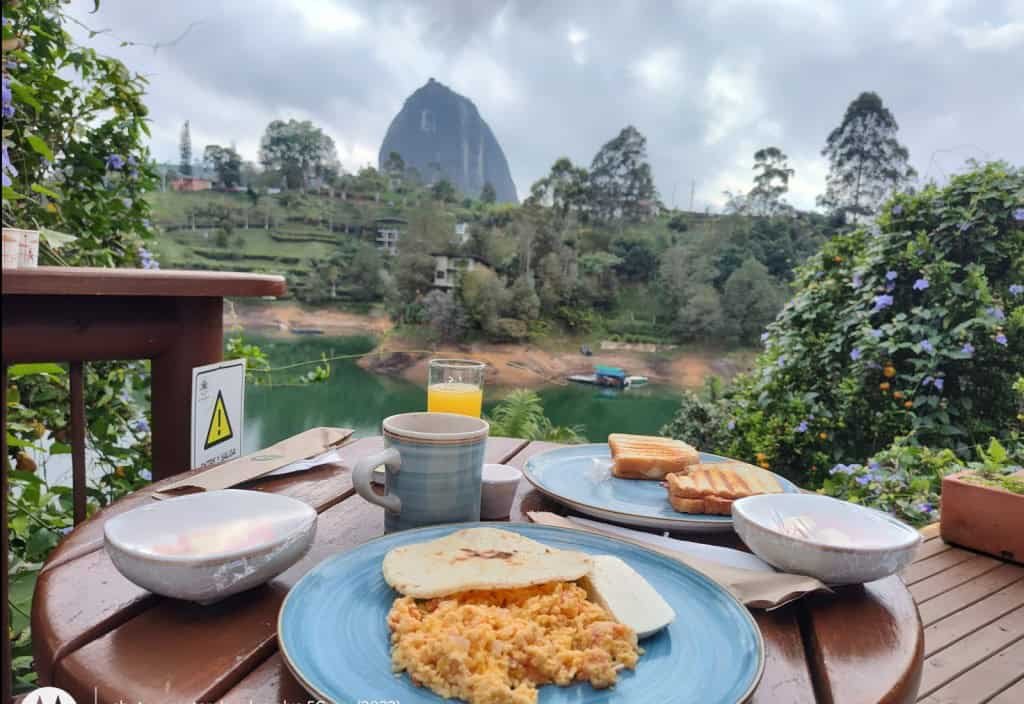
Eggs and arepas are common, but depending on the region and household you might also encounter cheese, bread, meat, rice, leftovers or soup.
Yes, soup for breakfast.
In some parts of Colombia, dishes such as caldo de costilla, a beef-rib broth usually served with potatoes, are traditional morning food.
That may sound unusual to an American.
Spend enough time here and you stop being surprised.
Empanadas Are an Easy Place to Start
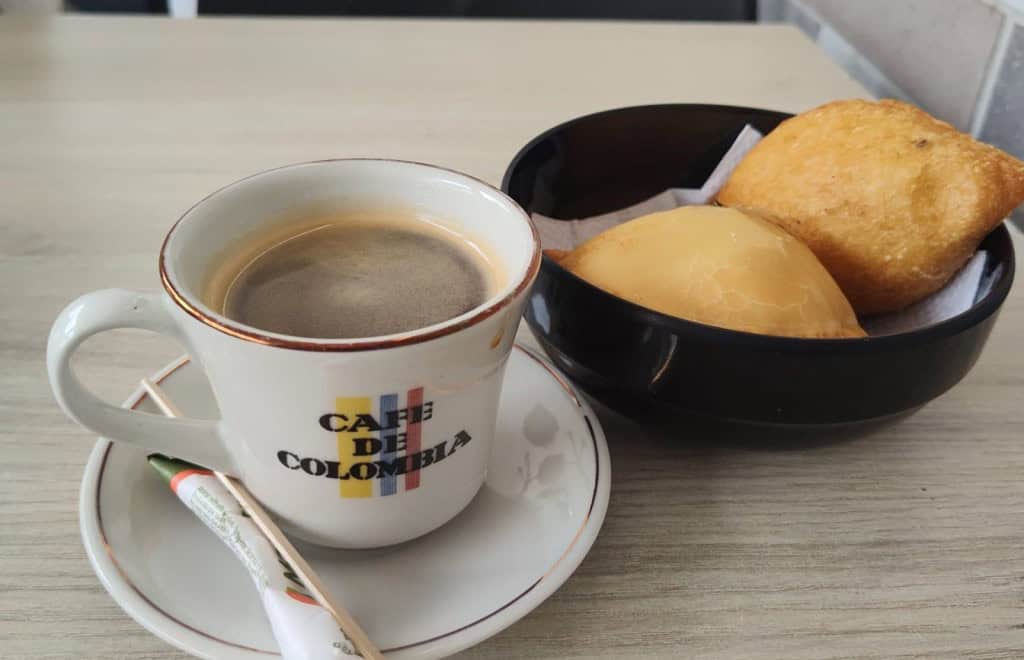
If you’re visiting Colombia for the first time and don’t know where to begin, an empanada is pretty easy.
Colombian empanadas are usually made with a corn-based exterior and fried.
Fillings commonly include meat and potatoes, although there are many variations.
They’re inexpensive, widely available and easy to eat as a snack.
Add a little ají if you want more flavor.
Just remember that Colombian ají isn’t necessarily the same experience as the hot sauces you may associate with Mexico.

Colombia Isn’t Necessarily About Spicy Food
This is another difference Americans familiar with Mexican cuisine may notice.
Colombian food isn’t generally defined by heat.
That doesn’t mean the food lacks flavor.
But you’re not necessarily going to encounter chile peppers and spicy sauces dominating every meal.
Condiments such as ají allow you to add some heat yourself.
For me, understanding that difference was part of stopping the comparison with Mexican food and simply appreciating Colombian cuisine for what it is.
Lunch Is a Big Deal in Colombia
One of the best values I’ve found in Colombia isn’t necessarily a particular dish.
It’s lunch.
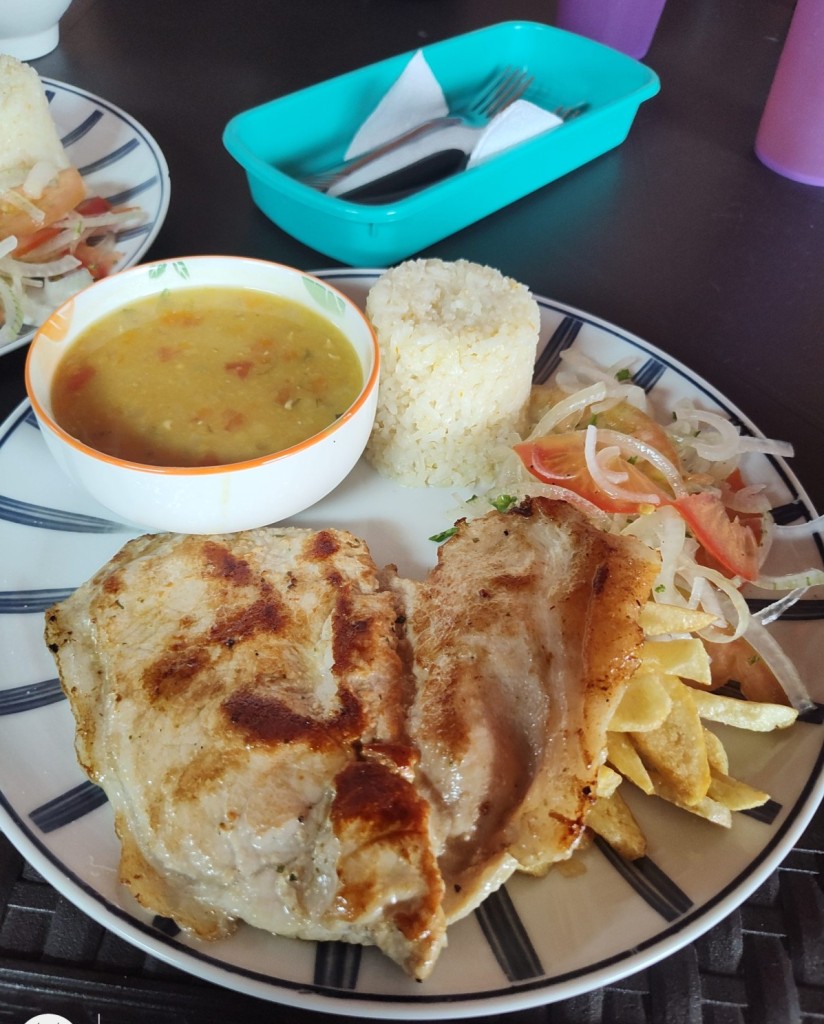
Throughout Colombia you’ll see restaurants offering a menú del día or set lunch.
For one price, you may receive soup, a main course, rice, salad or another side, and a drink.
The exact combination varies tremendously.
But these lunches can provide a substantial freshly prepared meal without spending much money.
This is one of those everyday aspects of Colombia that tourists staying around upscale restaurant districts can easily miss.
People who actually live here know how useful the menú del día can be.
I’ve Been Impressed With Colombian Restaurants
Restaurants are one of the things I’ve consistently enjoyed while living and traveling throughout Latin America.
Colombia is no exception.
I’ve eaten in expensive restaurants, inexpensive neighborhood restaurants and plenty of places in between.
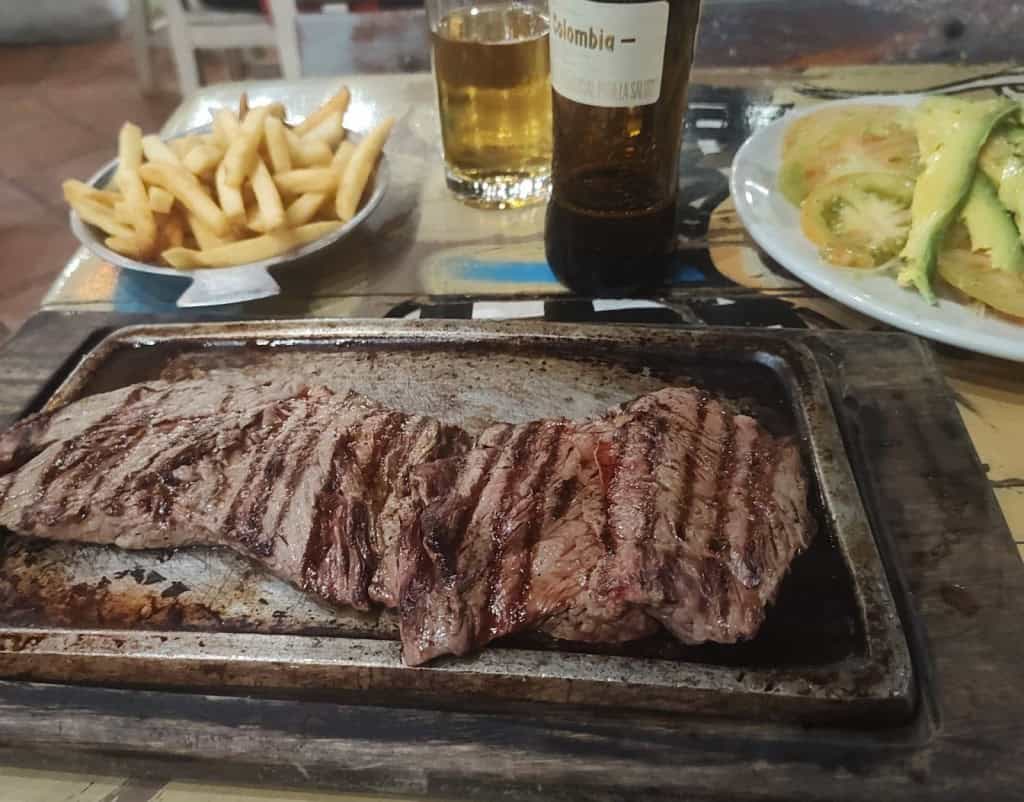
One thing I appreciate is receiving food that tastes freshly prepared and arrives hot.
There seems to be pride in the preparation.
Of course I’ve had meals I didn’t particularly care for. That’s going to happen anywhere.
But overall, I’ve been impressed with the quality I can get for the money.
The Price Still Gets My Attention
This is especially noticeable coming from Southern California.
A restaurant meal that would cost considerably more in San Diego can often be enjoyed for much less in Colombia.
The exchange rate has changed considerably since my first visit in 2021, and Colombian prices have risen too.
So I don’t look at Colombia as some place where everything costs almost nothing.
It doesn’t.
But I can still go out with my wife, have a good meal, and frequently spend considerably less than I would expect to spend for a comparable experience in California.
That’s one of the everyday advantages I continue to appreciate.
Not Everything Became My Favorite
I think travel content sometimes creates the impression that you’re supposed to love everything about another country’s culture.
I don’t.
There are Colombian dishes I enjoy and others I could happily skip.
There are foods I’ve grown accustomed to rather than fallen in love with.
And that’s perfectly fine.
I don’t expect a Colombian moving to the United States to suddenly love every American dish.
Part of respecting another culture is being willing to experience it without pretending every experience is your favorite.
I’ll eat my plantains.
I’ll enjoy some chicharrón.
I’ll try regional dishes when I’m traveling.
And there are still times when I want something completely different.
That’s normal life.

Colombian Food Changes From Region to Region
This is probably the biggest thing I’d tell someone planning a trip around Colombia.
Don’t decide what Colombian food is after eating in one city.
Medellín and Antioquia give you Paisa traditions such as bandeja paisa.
Bogotá introduces dishes such as ajiaco.
The Caribbean coast brings seafood, coconut rice and other coastal flavors.
Cali and the Pacific region bring another set of culinary influences.
Santander has its own traditions.
And there are many more regional dishes I haven’t experienced yet.
I’m still interested in spending more time in Colombia’s Coffee Region, so there are plenty of things left for me to discover.
That’s part of the fun.
What Should Americans Eat on Their First Trip to Colombia?
If this is your first visit, I wouldn’t try to create some giant checklist and spend the entire vacation hunting down food.
Just eat where Colombians are eating and try things as you travel.
But I’d certainly experience a few classics:
- Arepas — because you’ll encounter them everywhere.
- Bandeja paisa — particularly around Medellín and Antioquia.
- Ajiaco — especially while visiting Bogotá.
- Sancocho — preferably somewhere known for its regional version.
- Empanadas — an easy Colombian street-food introduction.
- Chicharrón — especially if you’re exploring Paisa food.
- Fried fish with coconut rice and patacones — on the Caribbean coast.
- A menú del día — because that’s part of everyday Colombian eating, not merely tourist dining.
And try whatever regional specialty someone recommends while you’re there.
That’s usually where travel gets interesting.
Colombian Food Is Part of Understanding Colombia
After years of traveling and living here, food has become another reminder of how diverse Colombia really is.
The country changes as you move through it.
The accents change.
The climate changes.
The landscapes change.
The culture changes.
And the food changes right along with them.
That’s something I didn’t fully appreciate when my main reference point for Latin American food was Mexican cuisine.
Traveling through Costa Rica, Mexico, Ecuador and eventually Colombia expanded that perspective.
And I’m still learning.
Final Thoughts
When I first started traveling through Latin America, I had to stop thinking about everything through the lens of what I already knew.
That included food.
Colombian food isn’t Mexican food with different names.
And Colombian cuisine itself isn’t one fixed collection of dishes.
It’s regional, influenced by geography, history, climate and culture.
Some dishes took me a while to appreciate.
Some I liked immediately.
And there are undoubtedly plenty I haven’t tried yet.
But that’s one of the reasons I continue traveling.
I don’t need every place to taste like home.
Part of the experience is discovering what people eat when you’re in theirs.





[…] Colombian street food is affordable, flavorful, and deeply connected to the country’s culinary traditions. […]
[…] travelers visiting Colombia for the first time, trying traditional Colombian foods is one of the best ways to understand the culture. Colombian dishes are known for hearty portions, […]
[…] food is also an essential part of Colombian food culture, offering affordable and flavorful options throughout the […]
[…] Traditional Colombian food is a celebration of history, culture, and soul-warming flavors that reflect the country’s diverse landscapes. From hearty Andean soups to Caribbean fried fish and Pacific coconut dishes, Colombian cuisine is as rich and vibrant as the people who create it. Whether you’re traveling, living abroad, or simply curious about Colombian flavors, this guide will walk you through everything you need to know. […]
[…] Colombia introduced me to additional dishes and different ways of preparing familiar ingredients. […]
[…] […]